Exploring The Depths Of Reality: Strange Hypothetical Questions
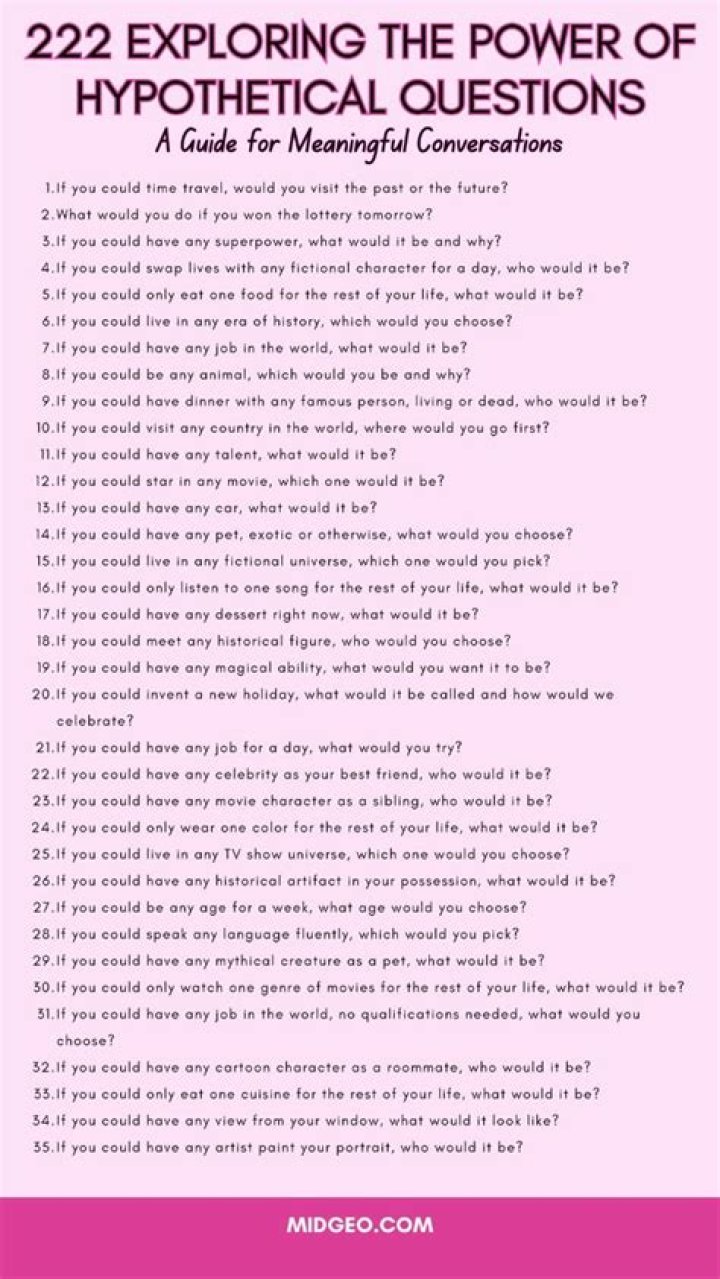
Hypothetical questions often take us on a whimsical journey through the realms of imagination, challenging our perceptions and beliefs about reality. They invite us to explore scenarios that, while unlikely, can spark insightful conversations and deep reflections. Strange hypothetical questions can range from the mildly bizarre to the utterly perplexing, offering a playful twist on the ordinary and pushing the boundaries of our thought processes.
What if we could alter time, or perhaps even reality itself? These questions can lead to unexpected revelations about our values, fears, and desires. Engaging with strange hypothetical questions not only entertains but also encourages critical thinking and creativity. In this article, we will delve into some of the most curious and thought-provoking hypothetical questions that challenge our understanding of the world around us.
As we embark on this exploration of strange hypothetical questions, prepare to stretch your imagination and consider perspectives you may not have thought of before. The following sections will guide you through various categories of hypothetical scenarios, each designed to ignite your curiosity and inspire deep contemplation.
What Are the Most Bizarre Hypothetical Questions?
The realm of strange hypothetical questions is abundant with quirky scenarios that can leave us scratching our heads. Some of these questions may seem trivial at first glance, yet they possess the power to reveal much about our personalities and beliefs. Here are a few examples:
- If you had to choose between being a giant hamster or a tiny rhino, which would you pick?
- If aliens landed on Earth and asked you to represent humanity, what would you say?
- If you could only eat one food for the rest of your life, what would it be and why?
How Do Strange Hypothetical Questions Affect Our Decision Making?
Engaging with strange hypothetical questions can have surprising effects on our decision-making processes. They encourage us to think outside the box and consider alternative outcomes. By exploring these unusual scenarios, we can challenge our biases and assumptions, leading to more nuanced perspectives.
Can These Questions Help Us Understand Ourselves Better?
Indeed, strange hypothetical questions can serve as mirrors, reflecting our values and priorities. When faced with peculiar dilemmas, we may discover hidden truths about ourselves, such as our willingness to take risks or our moral compass. By examining our responses, we gain insights into our character and motivations.
What Would Happen If Animals Could Talk?
Imagine a world where animals could communicate with humans. How would this shift our relationship with them? Would we still exploit them for entertainment or food, or would we treat them with greater empathy and respect? This strange hypothetical question opens the door to discussions about ethics, empathy, and our responsibilities toward other living beings.
Could We Solve Global Issues If We Understood Animal Perspectives?
Understanding animals' viewpoints could lead to revolutionary changes in environmental policies, animal rights, and conservation efforts. If animals could articulate their experiences and thoughts, it might reshape our approach to issues such as habitat destruction, climate change, and species extinction. This hypothetical scenario compels us to reconsider our place within the ecosystem.
What Would Be the Most Surprising Thing We’d Learn From Animals?
One of the most fascinating aspects of this hypothetical situation is the potential for unexpected revelations. Animals may possess insights about their habitats, social dynamics, and even human interactions that we have yet to comprehend. Such knowledge could challenge our assumptions and deepen our understanding of the natural world.
Is Time Travel a Possibility in Strange Hypothetical Questions?
Time travel has long captured the human imagination. Strange hypothetical questions surrounding time travel can lead to intricate discussions about causality, ethics, and the nature of time itself. Would you change past events if given the chance, or would you prefer to avoid the complications of meddling with history?
What Would Be the Consequences of Altering History?
The consequences of time travel are often depicted in literature and film, highlighting the potential ripple effects of seemingly small changes. Would a single alteration lead to a vastly different present? This aspect of strange hypothetical questions encourages us to reflect on the interconnectedness of our actions and their long-term impacts.
Can We Learn Valuable Lessons from Time Travel Hypotheticals?
Exploring the implications of time travel can provide valuable insights into our current choices and behaviors. It challenges us to consider the significance of our decisions and the legacies we leave behind. By contemplating these strange hypothetical questions, we can foster a deeper understanding of our past and its influence on our future.
How Would Society Change If Everyone Could Read Minds?
Imagine a world where mind reading was a reality. This strange hypothetical question raises intriguing possibilities about privacy, trust, and communication. Would people be more honest, or would the lack of privacy lead to societal chaos?
What Would Be the Pros and Cons of Mind Reading?
The ability to read minds could revolutionize personal and professional relationships. On one hand, it might foster unprecedented levels of understanding and empathy. On the other hand, it could erode trust and lead to conflicts as people grapple with the knowledge of others' thoughts. This hypothetical scenario encourages us to consider the balance between transparency and privacy.
Would Mind Reading Change Our Approach to Conflict Resolution?
In a world where minds could be read, conflict resolution might take on an entirely new dimension. Direct access to thoughts could facilitate understanding and negotiation, but it might also intensify disputes as individuals confront uncomfortable truths. This aspect of strange hypothetical questions invites us to explore the complexities of communication and human interaction.
What If We Could Live Forever?
The prospect of immortality raises profound questions about the meaning of life and the nature of existence. If we could live indefinitely, how would that change our priorities and relationships? Would life lose its value without the finite nature we currently experience?
How Would Society Adapt to Immortality?
A society of immortals would inevitably face unique challenges, from resource management to social dynamics. Would the population become stagnant, or would new generations continue to innovate and evolve? This strange hypothetical question encourages us to reflect on the role of mortality in shaping human behavior and societal development.
What Would Be the Psychological Effects of Living Forever?
Living forever could have significant psychological implications. Would individuals struggle with boredom, or would they find new meaning and purpose in their endless lives? This aspect of strange hypothetical questions prompts us to consider the human psyche's resilience and adaptability in the face of extraordinary circumstances.
How Do Strange Hypothetical Questions Influence Creativity?
Strange hypothetical questions can serve as powerful catalysts for creativity. By encouraging unconventional thinking, they can inspire new ideas, art, and innovation. Engaging with these questions can help us break free from rigid thought patterns and explore uncharted territories of imagination.
Can Creative Problem Solving Benefit from Hypothetical Scenarios?
Hypothetical scenarios can stimulate creative problem-solving by prompting us to consider alternative solutions. When faced with strange hypothetical questions, we may discover innovative approaches to challenges in our personal and professional lives. This process enhances our ability to think critically and develop imaginative strategies.
What Role Do Strange Hypothetical Questions Play in Education?
In educational settings, strange hypothetical questions can engage students and encourage them to think critically. These inquiries can spark lively discussions and deepen understanding across disciplines. By incorporating hypothetical scenarios into lesson plans, educators can foster a culture of curiosity and exploration.
In conclusion, strange hypothetical questions offer a unique lens through which we can examine our beliefs, values, and relationships. Whether contemplating the implications of time travel, mind reading, or immortality, these questions prompt us to think deeply about our world and our place within it. By engaging with these whimsical inquiries, we can spark creativity, foster understanding, and explore the mysteries of existence.
Unraveling Brad Pitt's Life Path: A Journey Through Fame And Personal Growth
Bobby Flay's New Chapter: The Story Of His Wife In 2024
The Legacy Of Chaplin Children: A Journey Through Time
101 Hypothetical Questions That Would Force You to Question Everything
Hypothetical Question Meaning and Examples Poem Analysis
390 Hypothetical Questions [The GoTo Resource]
